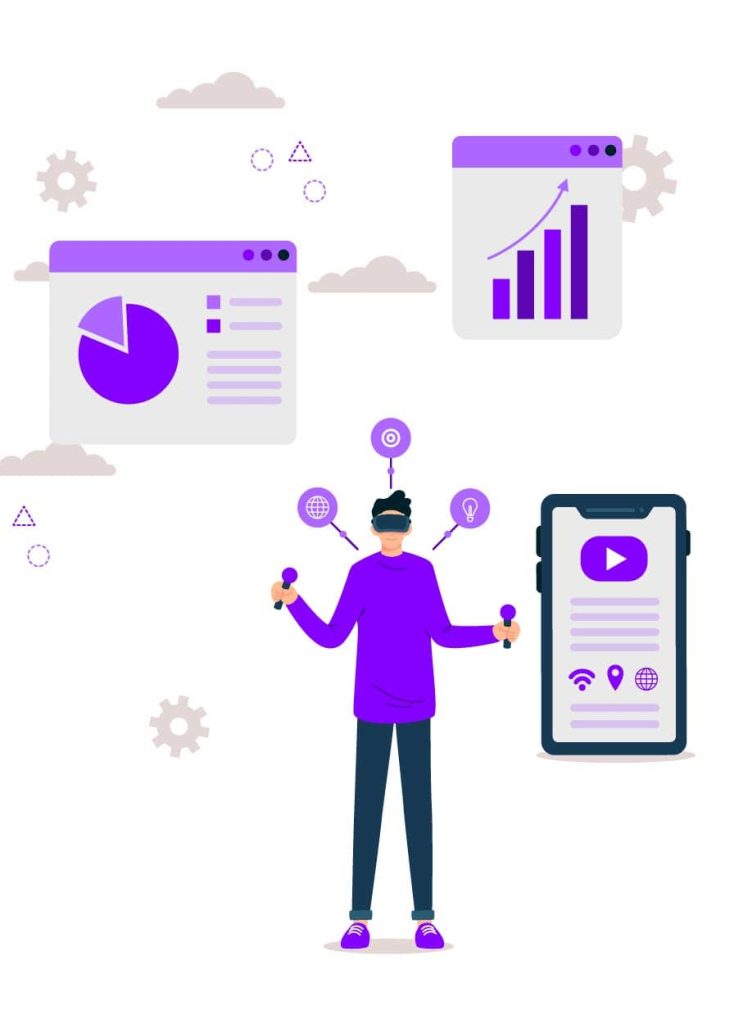
How AI Marketing Experts Do for Audience Targeting
AI marketing experts assist businesses convert raw data into better audience targeting strategies. Instead of guessing which users are most likely to convert, they use machine learning, behavioral data, and predictive analytics to spot high-value groups and match them with the right message at the right time.
In Buffalo companies, this matters because the local market is diverse. A brand trying to reach office workers in Downtown Buffalo will not use the same approach as a business targeting families in North Buffalo or shoppers in the Elmwood Village. Effective customer segmentation lets marketers to classify these groups based on user intent, purchase patterns, location, and engagement history.
AI helps refine the target audience by detecting patterns that human analysis can miss. For example, if one group consistently engages with service pages during winter weather shifts, while another responds to event promotions near Canalside, those signals can shape smarter messaging. The result is better targeted campaigns, stronger engagement, and improved performance across channels.
Why Customization Is Important for Buffalo Businesses
Tailoring is no more a premium feature. It is a major driver of sales conversions, most notably for Buffalo, NY businesses operating in competitive local markets. Customers expect brands to understand their goals, location, and position in the customer journey. When messaging feels one-size-fits-all, users often leave before taking action.
In Buffalo, personalization has an even bigger impact because local demand can shift quickly. Winter weather can change buying behavior, urgency, and online browsing habits. Event-driven traffic around Canalside, downtown commerce, and seasonal tourism also drives spikes in search interest. AI-powered personalization helps businesses respond to these shifts with more relevance and better timing.
Improved personalization can also strengthen customer experience. When a visitor sees content tailored to their neighborhood, service need, or previous interaction, the experience feels simpler and more helpful. That can build trust, improve lead capture, and support stronger long-term loyalty.
How AI Strengthens web design, seo services, digital marketing
AI is most powerful when it is integrated with web design, SEO services, and digital marketing rather than treated as a different tool. AI-driven insights can guide layout decisions, content strategy, keyword targeting, and campaign automation across the full marketing stack.
In web design, AI can assist in prioritizing page elements based on user behavior, enhance navigation flows, and support conversion rate optimization. If analytics show that Buffalo visitors are leaving before reaching a contact form, design changes can be made to minimize friction and improve conversion.
For SEO services, AI enables faster keyword clustering, intent mapping, and content optimization. It can identify which topics align with local search intent and where pages may need better internal links or better semantic coverage. That leads to better local visibility and better rankings for relevant search terms.
In digital marketing, AI automation makes it simpler to scale campaigns while keeping them personalized. Marketers can refine ad audiences, trigger follow-up emails, and improve messaging based on live performance signals. This kind of automation boosts efficiency without sacrificing strategic control.
Audience Data Sources AI Specialists Use to Build Better Audiences
Effective targeting starts with the right data. The top AI marketing experts blend multiple sources to create a more precise view of user behavior and intent. That includes first-party data, website analytics, CRM data, and behavioral signals captured across digital touchpoints.
First-party data is especially important because it comes directly from your own audience. This may include form submissions, email signups, purchase history, or page interactions. Since it reflects real customer activity, it gives AI models a stronger foundation for segmentation and personalized messaging.
Website analytics reveal how users move through a site, which pages they visit, where they drop off, and what content drives the most engagement. That helps marketers analyze user intent and improve the customer journey.
CRM data brings sales and service context, showing which leads converted, which accounts need follow-up, and how different audience groups respond over time. When paired with behavioral data, it helps form a more complete picture of the target audience.
Behavioral signals such as repeated visits, scroll depth, search terms, and content interactions also help AI systems predict what users want next. These insights make campaigns more data-driven and more effective across scalable campaigns.
AI Personalization Tactics That Deliver Results for Local Audiences
Local markets need personalization tactics that feel relevant rather than overbearing. AI makes this achievable through adaptive content, tailored email, recommendation engines, and retargeting tactics that adapt to audience behavior.
Adaptive content can change based on visitor location, previous activity, or service interest. A user from Buffalo searching for winter-related services may see varied homepage messaging than a visitor from a nearby suburb looking for a year-round solution. This drives stronger relevance and better engagement.
Personalized email marketing allows businesses to send customized subject lines, offers, and follow-up sequences based on customer segmentation. A Buffalo retailer, for example, might feature seasonal products before a winter storm or send event-based reminders tied to downtown activity.
Recommendation systems are useful for e-commerce and service businesses alike. They can suggest products, articles, or next-step actions based on prior behavior, increasing conversion rate optimization opportunities.
Retargeting helps re-engage visitors who left before converting. When AI identifies which users are most likely to return, businesses can deliver more accurate ads and messages that match earlier interactions. That improves performance and reduces wasted spend.
Using AI for Local SEO with Buffalo Search Intent
Local SEO is one of the most effective places for AI to enhance marketing performance. Buffalo search behavior often includes location-based modifiers, nearby intent, and seasonal demand. AI helps businesses evaluate search intent and build content that fits what local customers are actually looking for.
One of the key local signals is the Google Business Profile. For Buffalo searches, profile optimization can influence visibility in map results and local packs. AI can help identify which categories, business descriptions, photos, and service areas are most valuable for different audience segments across Western New York.
Geo-targeting is another important tactic. It allows marketers to focus on users near Downtown Buffalo, the Elmwood Village, North Buffalo, Canalside, and nearby suburban search demand. This is especially valuable for businesses that want to reach people within a defined drive radius or service area.
AI also enhances content planning for local SEO by identifying the questions and terms that match user intent. If people frequently search for Buffalo-specific service terms during winter or around major events, marketers can create pages and FAQs that fulfill those needs. That strengthens local visibility and drives more qualified lead generation.
Measuring ROI from AI-Driven Targeting
To support the investment, businesses need a clear way to measure ROI. AI-driven targeting should boost more than clicks. It should improve lead quality, audience engagement, and overall revenue.
A/B testing is one of the strongest ways to test AI recommendations. By testing copy, page layouts, CTA buttons, or ad messages, marketers can see which version drives stronger results with a target audience. That creates a clear link between optimization and results.
Engagement rate shows whether the audience is responding to the content, while lead quality reveals whether those interactions are producing real opportunities. A campaign with a strong click rate but poor lead quality may need better segmentation or stronger messaging.
Sunstone Digital Tech50 Fountain Plz #1400, Buffalo, NY 14202
(315) 758-3349
https://maps.app.goo.gl/y9HMhvcoPCh9V3eKA
https://sunstonedigitaltech.com/buffalo-marketing-agency/web-design
42.8898193, -78.8738661
Attribution is also essential. If AI is helping across channels, businesses should monitor how web design updates, SEO services, and digital marketing campaigns add to conversion. This helps determine which tactics support the best return and where to improve next.
For Buffalo companies, ROI may also show up in reduced wasted ad impressions, better conversion rate optimization, and more consistent performance from local campaigns focused on the right neighborhoods and search terms.
Picking the Right AI Experts for Your Buffalo Company
Not all AI experts have the same background with local marketing, and not every company needs the same level of sophistication. A strong partner should understand marketing strategy, the realities of Buffalo search behavior, and how to integrate AI with existing systems and goals.
Look for industry experience that matches your business model. A B2B service company, a retail brand, and a local home services provider will each need different audience targeting methods. The best partner should be able to explain how AI supports personalization, lead generation, and performance without relying https://sunstonedigitaltech.com/ai-experts-in-buffalo/ on buzzwords.
They should also provide an implementation roadmap that covers data collection, campaign setup, testing, and reporting. That roadmap should show how AI will support your web design, SEO services, and digital marketing efforts in a practical, phased way.
Important Questions to Ask Before Hiring
Before choosing a partner, ask for case studies that show real results with audience targeting, personalization, or conversion improvement. Such studies help confirm that the team can apply strategy to measurable outcomes rather than theoretical ideas.
Ask how they handle data privacy and whether their approach follows best practices for consent, storage, and customer trust. Since first-party data is central to AI strategy, protecting it should be nonnegotiable.
Request a clear view of the tool stack. You should know what platforms they use for analytics, automation, CRM integration, and reporting. A solid tool stack should fit your current systems and support scalability.
Finally, ask how often they provide reporting and what metrics they track. Good reporting should connect AI activity to engagement, attribution, lead generation, and ROI so you can see what is working.
Mistakes to Watch For
One of the biggest mistakes is over-automation. AI should support decision-making, not remove human judgment from the process. If messaging becomes too robotic, personalization can feel empty and reduce trust.
One more issue is bad data quality. If your CRM data is outdated or website analytics are incomplete, AI predictions will be less accurate. Good data hygiene is essential for accurate segmentation and performance.
Companies also run into trouble with poor messaging. Even the best targeting strategy will underperform if the content does not speak clearly to the audience’s needs, location, or stage in the customer journey.
Finally, don’t ignore attribution gaps. If attribution is incomplete, it becomes hard to measure engagement, optimize campaigns, or prove ROI. Make sure tracking is consistent across web design, SEO services, and digital marketing channels.
FAQ
In what way do AI marketing experts improve audience targeting?
AI marketing experts improve audience targeting by using machine learning, customer segmentation, and predictive analytics to identify the most relevant groups. They analyze first-party data, website analytics, CRM data, and behavioral signals to understand user intent and build more precise, scalable campaigns.
What tailored tactics work best for Buffalo businesses?
For Buffalo businesses, the best personalization strategies often include dynamic content, email personalization, recommendation engines, and retargeting. These tactics work well when they reflect local conditions like winter demand shifts, neighborhood differences, and event-driven traffic around areas such as Downtown Buffalo and Canalside.
How does AI support web design, SEO services, and digital marketing together?
AI can connect web design, SEO services, and digital marketing by using performance insights to guide layout changes, content optimization, keyword targeting, and marketing automation. This creates a more data-driven system that improves relevance, engagement, and conversion across the full customer journey.
What data do AI experts need for effective targeting?
Effective targeting usually depends on first-party data, website analytics, CRM data, and behavioral signals. These sources help AI experts understand audience behavior, measure attribution, and create personalized messaging that matches user intent and conversion goals.
How can I calculate the ROI of AI-driven personalization?
Measure ROI by monitoring CRO results, engagement rate, lead quality, and revenue generated from AI-driven campaigns. A/B testing, strong reporting, and clean attribution help reveal whether personalization is boosting performance and providing meaningful business value.